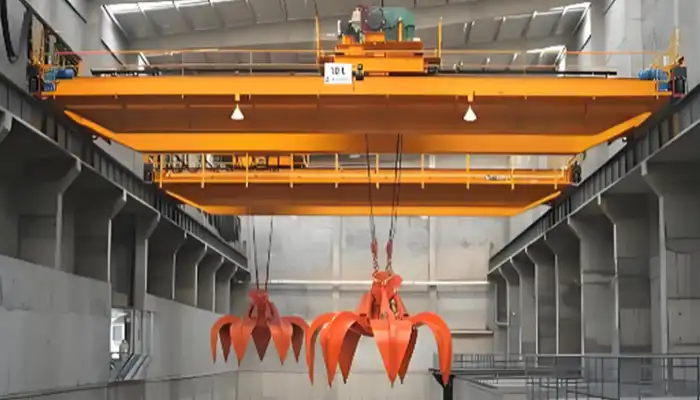
One or Two Waste Grab Cranes? Maximize Plant Reliability
menu_open
Content Quick Link
One or Two Waste Grab Cranes? Choosing the Right Redundancy Strategy for Maximum Plant Reliability
Introduction
Understanding why waste grab crane redundancy is crucial for modern MSW plants to maintain continuous operation and minimize downtime risks.
Why Waste Grab Crane Redundancy Matters in Modern MSW Plants
Waste grab cranes are the heartbeat of an MSW plant. They move large volumes of waste from bunkers to feeding systems, ensuring continuous operation. A single crane failure can disrupt the entire plant, create bottlenecks, and introduce safety hazards.
Investing in redundancy is not just about having a backup—it protects plant operations, maintains consistent throughput, and avoids costly unplanned shutdowns. A second crane helps maintain production even when one unit is offline.
Risks of Relying on a Single Crane
- Unexpected Downtime: Mechanical failures, electrical issues, or routine maintenance can halt waste handling.
- Reduced Plant Availability: Every hour the crane is offline directly impacts the feeding schedule.
- Safety Concerns: Overloading or rushing the crane during peak operation increases accident risk.
- Financial Impact: Lost throughput translates to lower revenue and potential penalties in contracted waste processing.
Even cranes with excellent maintenance cannot fully eliminate failure risk. Plants handling large volumes or running continuously face significant vulnerability with a single crane.
Introducing the Dual Waste Grab Crane System
A dual waste grab crane system involves two cranes installed on the same bunker or feeding area. The second crane can function as:
- Standby Crane: Activated only when the primary crane is offline.
- Parallel Crane: Both cranes operate simultaneously, increasing handling capacity and operational flexibility.
This setup allows continuous operation, scheduled maintenance without production stops, and improved overall plant availability. It embeds reliability directly into waste handling rather than reacting to downtime after it occurs.
Single-Wast Handling Crane Risks
Why relying on a single waste grab crane in an MSW plant can create operational, safety, and financial vulnerabilities.
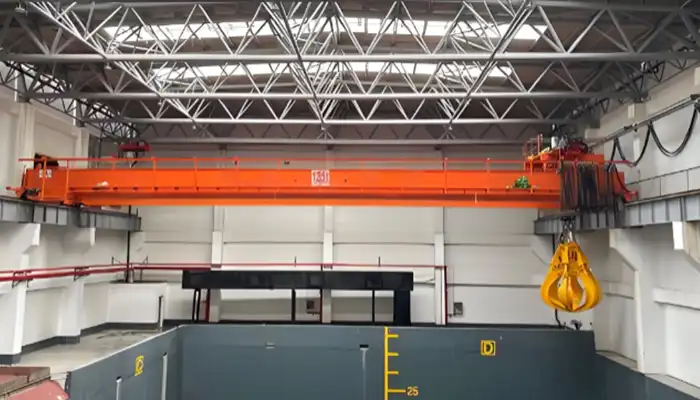
Impact on Plant Availability if the Crane Fails
The waste grab crane is central to feeding bunkers and keeping operations flowing. Any downtime immediately affects throughput and can cause unplanned idle time for downstream equipment.
- Plants relying on a single crane may see availability drop by 10–30% during maintenance or failure.
- Delays in feeding waste into combustion or sorting systems create bottlenecks, slowing other processes.
- Emergency interventions may require stopping additional equipment for safety, further reducing efficiency.
Key takeaway: A single point of failure in waste handling can compromise the entire plant schedule.
Common Downtime Scenarios
Downtime is not limited to catastrophic failure. Typical scenarios include:
- Mechanical issues: Worn grab teeth, broken hoist cables, or motor faults.
- Electrical problems: Control system errors, short circuits, or power interruptions.
- Operational delays: Misalignment with hoppers, jams caused by oversized waste, or operator errors.
- Routine maintenance: Even planned inspections can cause hours of lost operation if no backup exists.
Most MSW plants experience at least one unexpected crane downtime per month, making redundancy a practical necessity.
Financial and Operational Consequences
- Lost throughput: Every hour of crane downtime reduces tons processed, impacting revenue.
- Higher emergency repair costs: Quick fixes often require overtime labor and expedited spare parts.
- Contractual penalties: Delays can trigger fines in plants with daily processing agreements.
- Increased operator stress: Crane failure may force rushed processes or unsafe workarounds, risking accidents and additional costs.
While a single crane may appear cost-effective initially, hidden operational and financial risks often outweigh the savings.
Redundancy Strategies Explained
Different approaches to waste grab crane redundancy and their practical applications in MSW plants.
Standby Crane: Definition and Typical Use Cases
A standby crane is a secondary waste grab crane installed primarily as a backup. It remains idle during normal operations but can be activated quickly if the primary crane fails or needs maintenance.
- Critical for plants where continuous operation is essential and downtime is costly.
- Effective for moderate waste volumes where one crane handles normal loads.
- Essential when maintenance windows are limited or unpredictable.
Key benefits:
- Minimizes unplanned downtime and keeps plant availability high.
- Allows scheduled maintenance without halting production.
- Reduces emergency repair pressure on operators and maintenance teams.
Parallel Operation: Both Cranes Active Simultaneously
In parallel operation, both cranes operate at the same time to handle waste. This setup is common in high-throughput plants where a single crane cannot meet daily demands.
- Large bunkers with long spans where a single crane is inefficient.
- Plants experiencing peak feeding times exceeding one crane's capacity.
- Facilities requiring flexibility and faster handling for varying waste volumes.
Advantages:
- Increases daily throughput and reduces cycle time.
- Provides operational flexibility: if one crane stops, the other continues at reduced efficiency.
- Balances wear and tear across both machines, potentially extending lifespan.
Key Differences in Operational Dynamics
The differences between standby and parallel operations is essential for choosing the right strategy:
| Feature | Standby Crane | Parallel Operation |
|---|---|---|
| Usage | Only during failure or maintenance | Both cranes active simultaneously |
| Investment | Lower operational cost (less wear) | Higher operational cost (double usage) |
| Throughput | Limited by primary crane | Increased throughput potential |
| Maintenance | Can schedule maintenance without stopping production | Requires careful coordination to avoid downtime |
| Plant Size Suitability | Medium to small bunkers | Large bunkers or high-capacity plants |
Some plants even combine strategies: one crane runs normally, while the second alternates between standby and partial parallel operation during peak loads for flexibility and resilience.
Dual Waste Grab Crane System Advantages
Key benefits of implementing two cranes for redundancy and operational efficiency in MSW plants.

Enhanced Plant Availability and Reduced Downtime
Having a dual waste grab crane system ensures continuous operation even if one crane experiences mechanical or electrical issues.
- Maintains feeding schedules when the primary crane is offline.
- Reduces lost throughput from unexpected issues.
- Allows operators to manage emergencies without halting downstream processes.
In essence, dual cranes act as operational insurance, ensuring the plant continues running smoothly during disruptions.
Flexibility in Maintenance Scheduling
Routine inspections and preventive maintenance can be scheduled without interrupting plant operations with a dual crane setup.
- One crane handles regular operations while the other undergoes maintenance.
- Maintenance can occur during lower-load periods, reducing operator stress.
- Spare parts and service teams can work efficiently without causing emergency stoppages.
This flexibility minimizes downtime risk and makes maintenance less disruptive, an advantage often overlooked when evaluating the cost of a second crane.
Safety and Operational Efficiency Improvements
Dual cranes also improve safety and efficiency in day-to-day operations:
- Operators avoid rushing a single crane during peak loads, reducing accident risk.
- Workload is distributed, minimizing wear on motors, hoists, and grabs.
- Better positioning and handling in long or irregular bunkers improves precision and reduces waste spillage.
These improvements protect personnel, extend equipment life, and make daily operations smoother.
Cost vs. Reliability Comparison
Analyzing the financial and operational trade-offs of adding a second waste grab crane.
Investment Cost of Adding a Second Crane
Adding a second waste grab crane requires upfront investment, but it's important to consider all cost components:
- Crane purchase and installation: Depends on capacity, span, and technology level.
- Electrical and structural modifications: Reinforced rails or upgraded power supply may be necessary.
- Training and integration: Operators and maintenance staff must become familiar with dual-crane operations.
While initial costs are noticeable, the potential savings from reduced downtime and emergency repairs often justify the investment.
Expected Return Through Reduced Downtime and Higher Throughput
A dual crane setup can generate ROI by improving plant reliability and productivity:
- Reduced downtime: If one crane fails, the other keeps operations running.
- Higher throughput: Parallel operation or standby usage allows more waste handling during peak periods.
- Optimized workflow: Operators can plan crane use efficiently, reducing cycle times and delays.
Many plants recoup a significant portion of the investment quickly, as avoided downtime alone can offset costs within months to a few years.
Long-Term Risk Mitigation Analysis
Beyond financial returns, a second crane provides practical risk management advantages:
- Reduced emergency repair costs: Urgent repairs can be scheduled during normal maintenance windows.
- Extended equipment life: Sharing workload reduces wear on motors, grabs, and hoists.
- Operational consistency: Reliable crane coverage ensures feeding schedules, contracts, and safety standards are met consistently.
Investing in a second crane safeguards plant operations and reduces long-term operational and financial risks.
Making the Right Choice for Waste Grab Crane Redundancy
Practical guidance for selecting the optimal redundancy strategy for your MSW plant.
Key Factors to Consider
Choosing the right redundancy strategy depends on plant layout, throughput, and maintenance capacity:
1. Plant Size and Layout
- Large bunkers or long spans often require both cranes running together to cover the area efficiently.
- Smaller bunkers may manage well with a single crane and a standby unit.
2. Daily Throughput and Peak Loads
- High-volume plants or those with peak feeding times benefit from parallel operation to prevent bottlenecks.
- Plants with steady, moderate loads may find a standby crane sufficient.
3. Maintenance Capacity and Crew Expertise
- Limited maintenance staff or less-experienced operators may prefer a standby crane to reduce complexity.
- Plants with skilled crews can handle parallel operations safely, maximizing throughput while sharing crane workload.
Choosing Between Standby and Parallel Operation
Use this framework to guide your decision:
When a Standby Crane Works Best:
- Moderate waste volumes with predictable schedules.
- Desire to minimize wear and operational costs.
- Maintenance windows are tight or inflexible.
When Parallel Operation Makes Sense:
- High daily throughput or large bunkers.
- Need to reduce cycle times and maximize daily handling.
- Maintenance and operators can manage coordination between two active cranes.
Pro Tip: Many plants combine strategies. One crane handles normal loads while the second remains on standby. During peak periods, both cranes operate in parallel, balancing cost, reliability, and efficiency.
Practical Recommendations for Plant Operators
Guidelines for integrating a second waste grab crane efficiently and safely.
Integrating a Second Crane Without Disrupting Operations
- Phased Installation: Install and commission the second crane in sections, keeping the primary crane operational as long as possible.
- Temporary Bypass Procedures: If the new crane affects the runway or bunker access, plan temporary routes or adjust feeding sequences.
- Operator Training Ahead of Time: Introduce staff to the new crane controls and emergency procedures before full operation begins.
Goal: Maintain plant throughput while gradually bringing the second crane online.
Best Practices for Testing Redundancy Systems
- Simulate Failure Scenarios: Test the system as if the primary crane fails, verifying that the backup crane can handle full load safely.
- Check Coordination in Parallel Mode: If both cranes operate simultaneously, ensure they move without interfering with each other or creating safety hazards.
- Routine Trial Runs: Schedule periodic redundancy tests to catch potential issues early and maintain operator readiness.
These practices confirm that the dual crane system improves plant availability rather than just adding equipment.
Aligning Crane Choice with Plant Expansion Plans
- Future Bunker Expansion: Ensure the second crane's reach covers potential future bunkers or feeding areas.
- Increased Throughput Requirements: Select cranes that can handle higher loads or faster cycle times if production increases.
- Compatibility with New Equipment: Make sure crane controls, hoists, and grab types remain compatible with other plant upgrades.
Designing a dual crane system with expansion in mind prevents costly retrofits and maintains operational flexibility for years.
Conclusion
Redundancy as Insurance for Plant Availability
A dual waste grab crane system is more than just extra equipment—it's a form of operational insurance. Plants that rely on a single crane risk unplanned downtime, reduced throughput, and added stress on operators and maintenance teams. By adding a second crane, whether in standby or parallel operation, you safeguard plant availability and maintain steady waste handling.
The Importance of Cost-Benefit Analysis
Before making the investment, it's essential to evaluate the costs versus the benefits:
- Compare the initial investment and ongoing operational costs with the potential losses from downtime.
- Factor in maintenance, training, and long-term plant expansion plans.
- Consider ROI not just in financial terms but in improved reliability, safety, and operational flexibility.
This analysis ensures that the dual crane system aligns with your plant's goals and maximizes the value of your investment.
Consult With Experts
Every MSW plant has unique requirements, from bunker size and layout to throughput and maintenance capacity. Consulting with experienced crane suppliers can help:
- Identify the best redundancy strategy for your specific plant.
- Select cranes with the right capacity, reach, and control systems.
- Plan installation and integration to minimize disruption.
Taking the time to plan with experts ensures your dual waste grab crane system delivers reliable performance, long-term flexibility, and operational peace of mind.

Article by Bella ,who has been in the hoist and crane field since 2016. Bella provides overhead crane & gantry crane consultation services for clients who need a customized overhead travelling crane solution.Contact her to get free consultation.